

Human capital management (HCM) is the set of practices and technology a company uses to attract, manage, develop and retain its people. It treats employees not as a cost line on the payroll report, but as capital: an asset whose value can grow—or shrink—depending on how it's managed.
In practice, when U.S. HR leaders talk about HCM today, they usually mean HCM software: the systems that run everything from payroll and benefits to recruiting, performance and workforce analytics. This guide explains what human capital management is, what HCM software does, how HCM systems differ from HRIS and HRMS, and how to choose the right human capital management solutions for your company in 2026.
What is human capital management?
Human capital management is a strategic approach to HR that views employees' skills, knowledge and behavior as capital the organization invests in. Where traditional HR focuses on administration—contracts, payroll, compliance—HCM adds a second question: how do we increase the value of our people over time?
That's why HCM covers the full employee lifecycle:
- Plan: workforce planning and organizational design.
- Attract: recruiting and employer brand.
- Onboard: getting new hires productive quickly.
- Manage: payroll, benefits, time and compliance.
- Develop: learning, performance and career growth.
- Retain: engagement, well-being and succession.
HCM in HR: what does HCM mean?
In HR, HCM stands for human capital management. You'll often see it used in three ways: as a philosophy (people are an asset to invest in), as a function (the HR team's strategic responsibilities) and, most commonly, as a software category (HCM systems and platforms).
What is HCM software?
HCM software is a platform, usually cloud-based, that brings the processes of human capital management into one system or connected set of systems. At minimum it stores employee records and runs payroll; the most complete human capital management systems also handle recruiting, performance, learning, workforce management and analytics.
Core HCM modules
HCM vs. HRIS vs. HRMS: what's the difference?
The three terms overlap and vendors use them loosely, but the general distinction looks like this:

Types of human capital management solutions
There's no single “best” HCM system. Human capital management solutions fall into four broad groups, and most companies end up combining more than one.
HCM technology in 2026: what has changed
Human capital management technology has moved through three generations. On-premise HR systems digitized paperwork. Cloud-based HCM brought everything into one browser and made HCM technology solutions accessible to mid-size companies. The current generation is AI-native: systems that don't just store people data, but interpret it and act on it.
For HR teams, the practical changes are:
- Plain-language questions instead of report builders.
- Personalized development generated for each employee, instead of one generic course catalog.
- Continuous signals instead of once-a-year surveys and reviews.
- Closed loops: a system that detects a gap, triggers an intervention and measures the result.
HCM software vs. human capital management services
Not every company wants to run HCM in-house. Human capital management services—outsourced payroll, professional employer organizations (PEOs), HR consulting and managed benefits—let a provider handle part of the work.
How to build a human capital management program
Software doesn't create an HCM strategy. A human capital management program does. The most effective programs follow the same cycle:
Most HCM programs are strong at stages 1 through 3 and weak at 4 through 6. Development is usually a generic course catalog, retention depends on an annual survey, and measurement stops at headcount and turnover. That's where the next generation of human capital management technology creates the most value.
How to choose an HCM system: 8 questions to ask vendors

Where Cairo fits in your HCM stack
Cairo is not a full HCM suite—it doesn't run payroll, benefits or time tracking. It's the intelligence and development layer that sits on top of the system of record you already use.
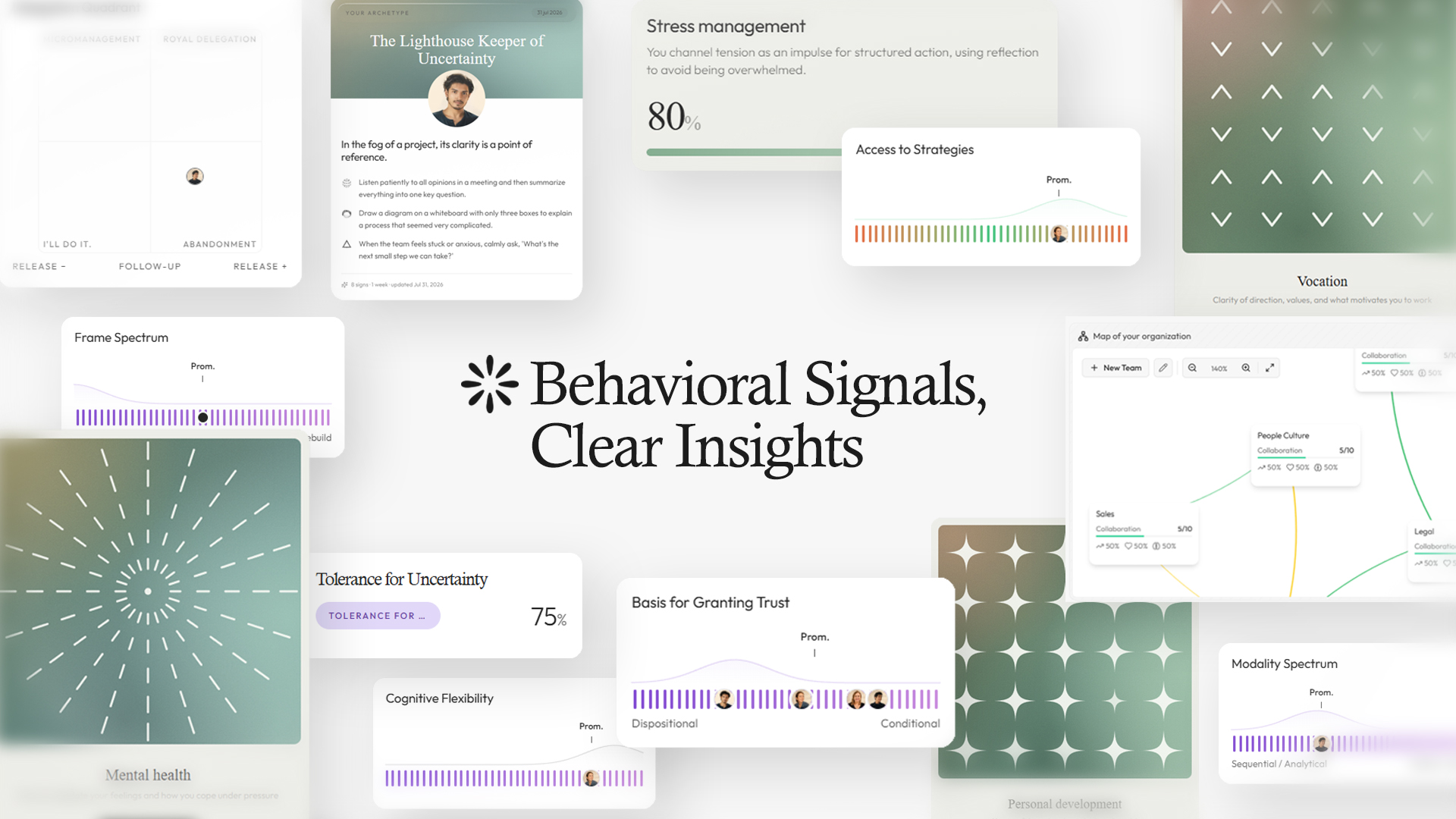
- Cairo Index profiles every employee across 80+ behavioral indicators from a 10-question assessment and turns them into your company's DNA. Managers ask questions in plain English and get narrative reports back.
- Dynamic Training turns every gap into a personalized path of 10-minute AI-generated courses, conversational simulations and live webinars—then measures whether behavior changed.
That covers stages 4 through 6 of the HCM program above: develop, retain and measure. Learn more about Cairo's human capital management software or see how it works for workforce analytics.
Frequently asked questions
What is HCM software?
HCM software is a platform that manages the employee lifecycle—from hiring and payroll to performance, learning and analytics—in one system or connected set of systems. Most modern HCM software is cloud-based.
What does HCM stand for in HR?
HCM stands for human capital management: the strategy and technology used to attract, manage, develop and retain employees as a source of value for the organization.
What is the difference between HCM and HR?
HR usually refers to the function and its administrative work. HCM is a broader, strategic view that includes HR administration plus talent, development, workforce planning and analytics.
What are examples of human capital management systems?
Examples include enterprise suites such as Workday, SAP SuccessFactors and Oracle Cloud HCM, payroll-led platforms such as ADP, UKG and Dayforce, and SMB platforms such as Rippling and BambooHR. Specialized layers like Cairo add intelligence and development on top.
What are human capital management services?
Human capital management services are outsourced HR offerings—payroll processing, PEOs, benefits administration and HR consulting—where a provider performs part of the HCM work for you.
Is Cairo an HCM system?
Cairo is an HCM layer, not a full suite. It provides people intelligence and AI-powered development and works alongside your HRIS or payroll system.
The bottom line
Human capital management is ultimately about one thing: increasing the value of your people over time. Your HCM system should record who works for you and pay them correctly—but the companies that win are the ones whose HCM technology also helps people grow.
If that's the layer your stack is missing, create your Cairo workspace and see your team's first profiles within weeks.